Table of Contents
- Introduction: Digital Collaboration in Modern Filmmaking
- What Are Digital Collaboration Tools for Filmmakers?
- The Reason Why Teamwork is a Challenge in Film Production
- Digital Collaboration Tool and Its Impact on Team Productivity.
- Centralized Communication
- Faster Decision-Making
- Having a Clear Role and Task Visibility
- Efficient File and Media Sharing
- Best Collaboration at a Distance
- The main characteristics to consider in the digital collaboration tools
- Digital Collaboration Tools Benefits at Production Stages.
- Pre-Production
- Production
- Post-Production
- The Collaboration Tools that help decrease stress on film teams.
- Common Mistakes Filmmakers Make Without Collaboration Tools
- Selecting the appropriate Collaboration Tool in your Team.
- Conslusion
- FAQs
1. Introduction: Digital Collaboration in Modern Filmmaking
Filmmaking has never been an individualist process. Whether it is the writers, directors, editors, cinematographers, producers, etc., there must be a seamless flow of people in every project. However, in a modern, remote and hectic working production world, teamwork is more complicated than it has ever been. Locations have been decentralized, deadlines are shorter, and the number of files and feedback has greatly grown.
That is where digital collaboration tools of filmmakers have altered the game. These tools are not considered as optional add-ons anymore, as these are critical systems that assist groups to communicate effectively, stay prepared and perform more effectively during the production process.
Here in the blog, we shall define what digital collaboration tools are, why filmmakers require them, how they enhance overall team productivity and some of the features that you should consider when selecting a suitable solution for your production processes. According to StudioBinder, structured production workflows and centralized communication systems significantly improve coordination and reduce delays in film production.
2. What are Digital Collaboration tools for Filmmakers?
Film maker digital collaboration tools refer to software platforms that aid the production team to communicate, coordinate and share work in a centralized digital platform. These tools allow all collaboration to be one structured system,m unlike the traditional method of collaboration, such as emails, telephone or hardcopy.
They are mostly applied to control:
- Team communication
- Task coordination, project updates.
- File and media sharing
- Feedback and approvals
- Time scheduling and workflow visibility.
These tools enable everyone to be connected on one platform, hence cutting down a lot of confusion and making production cooperation easier at all levels of production.
3. The reason why teamwork is a challenge in film productions.
The production of films requires the co-existence of various departments within a time constraint. Even in cases where the teams are experienced, common challenges are encountered without proper collaboration systems.
These challenges include:
- Inter-departmental miscommunication.
- Sluggish feedback and approvals.
- Lost or outdated files
- Unclear responsibilities
- Spendings of time in search of information.
When teamwork is not successful, loss of productivity is one of the losses. These problems are addressed by the digital collaboration tools, which create clarity, transparency, and accountability. To manage communication, tasks, and creative assets more efficiently, filmmakers can explore advanced production workflow solutions designed for modern film teams at Rezaid Film.
4. Digital Collaboration Tool and Its Impact on Team Productivity.
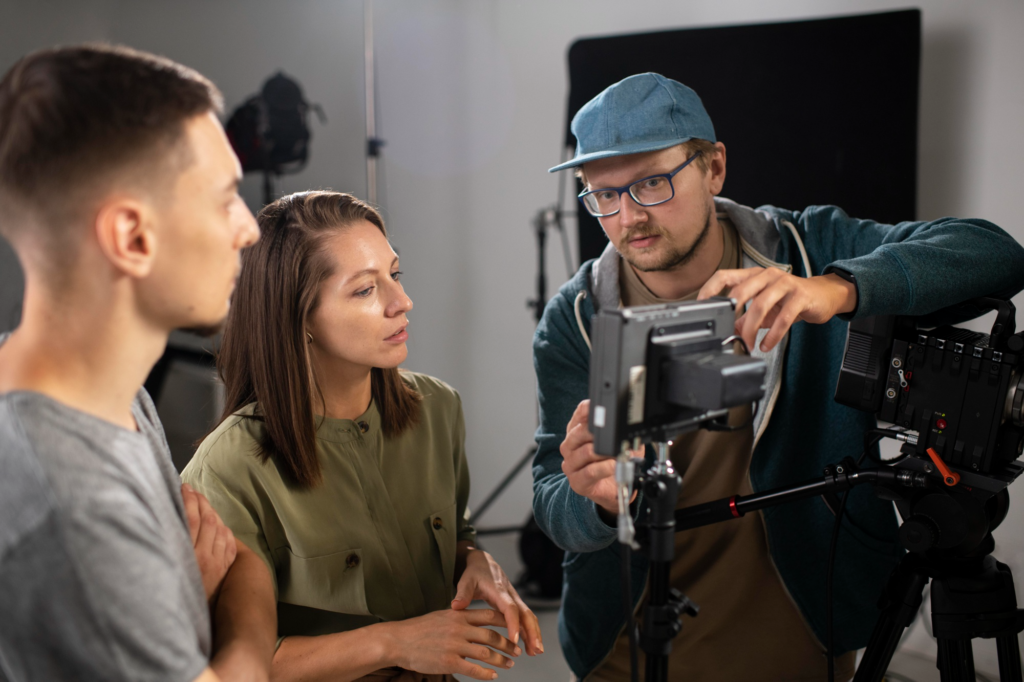
Collaboration tools are not only convenient but also productive, which is the greatest advantage. In situations where teams are more effective in communication and are operating on the same information, the process of progress becomes faster in itself.
This is the way in which these tools come in handy.
Centralized Communication
Collaboration tools consolidate all conversations, as opposed to having to balance emails, messaging applications, and phone conversations. Tasks, files or projects are attached to messages, and it is easy to understand the context.
This eliminates any chances of being misinterpreted, and no crucial discussions are ever lost.
Faster Decision-Making
Decisions are made more quickly when feedback and comments are centralized, as well as approvals. Without taking too long to come up with approvals and leave notes, directors and producers are able to conduct work reviews.
This accelerates the work processes and ensures that production progresses without unnecessary delays.
Having a clear Role and Task Visibility.
Collaboration tools are virtual and allow teams to formulate the roles and tasks of every individual. The people are aware of what to do, when to do it, and the amount of work done.
This does away with duplication of duties and responsibilities in the departments.
Effective File and Media sharing.
Filmmakers deal with high amounts of media in the form of scripts, footage, audio, and graphics. The collaboration tools offer structured file storage and sharing.
This ensures that:
- All people are accessing the right files.
- Versions are not mixed up.
- There is no time wastage in asset search.
- A productivity increase is directly related to better file management.
Better Collaboration at a Distance.
It is now common to have remote and hybrid production workflows. Digital collaboration tools enable teams to collaborate smoothly, irrespective of location.
Cloud access provides the ability to work in real time and allows producers and creatives to work anywhere.
5. The main characteristics to consider in the digital collaboration tools
Not every collaboration tool is appropriate in the production of a film. The features that are actually helpful to support the workflows of filmmakers are listed below.
Project-Based Communication
The tool must enable one to attach discussions to particular projects, tasks or files. That makes discussions current and comprehensible.
Task and Workflow Administration.
In cases where teams can imagine what to do and by whom, then productivity is improved. The tasks have to be assigned, progress has to be monitored, and status updated.
Asset Organization Media.
This is essential in terms of storage, organization, and sharing of media files. Find structured folders, access controls and version tracking.
Real-Time Updates
Immediate updates inform that any schedule, task or feedback is updated instantly. This will avoid mix-ups and time lag.
Review and Approval Tools
Inbuilt review functions enable stakeholders to comment, approve or seek changes on the same platform. This speeds up feedback processes.
Customizable Workflows
Each production is different. The most appropriate tools can enable movie producers to tailor workflows according to their employee count, filming methodology, and project difficulty.
Mobile and Remote Access
Remote collaborators and the on-set teams must have access. Accessible tools can be mobile-friendly to ensure that productivity is not limited when away from the office.
6. Digital Collaboration Tools Benefits at Production Stages.
The digital collaboration tools are also value added through out the filmmaking process.
Pre-Production
These tools are used during planning to share scripts, schedule and coordinate. The teams will be able to coordinate in advance and prevent misunderstandings in the future.
Production
In a set, collaboration tools maintain the departments updated, changed and daily progressed. This lowers downtime and misunderstanding.
Post-Production
During post-production, the feedback centralization and file sharing assist in making editors and creators work more quickly and precisely.
7. The Collaboration Tools that help decrease stress on film teams.
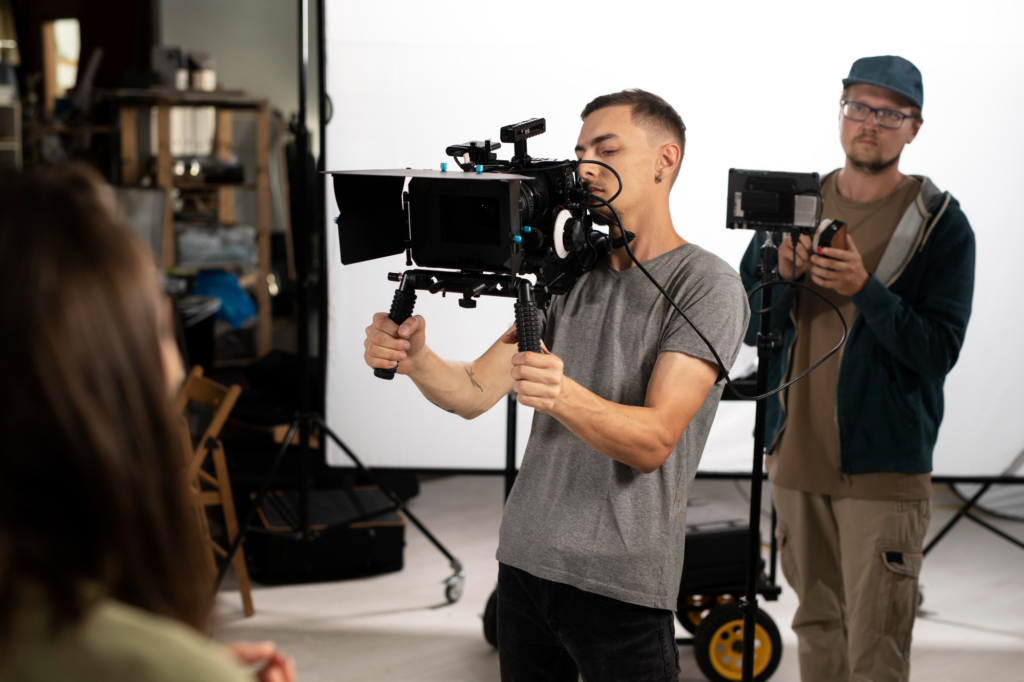
The process of film production is stressful, and this is worsened by a lack of communication. Teamwork tools render the teamwork experience less stressful by providing clarity and structure.
In knowing, team members feel more confident.
- What’s expected of them
- Where to find information
- Who to communicate with
This makes the working environment less stressful.
8. Common Mistakes Filmmakers Make Without Collaboration Tools
Unless teams are structured in their collaboration, they tend to have the same problems recurring again and again:
- Conflicting information
- Missed deadlines
- Repeated revisions
- Frustrated team members
Digital tools help to avoid such issues before they develop. Research published by Harvard Business Review explains that teams using centralized digital communication tools make decisions faster.
9. Selecting the appropriate Collaboration Tool in your Team.
The most appropriate collaboration tool is the one that is in line with your team’s workflow. Small groups might want simple platforms, and big productions require more advanced platforms.
The factors to be considered before selecting a tool are:
- Team size
- Production scale
- File volume
- Remote work needs
A fit is good so that the tool does not inhibit productivity but promotes it.
10. Conclusion
Online collaboration tools are now part and parcel of contemporary filmmakers. They improve communications, reduce errors and help teams to work together more collaboratively with each other at any stage of production. These tools remove red tape in the creative process by making conversations, tasks and assets central and letting teams use their time to tell stories rather than spend time tied up in logistics. When time, comprehension and teamwork are key factors in a business, digital collaboration tools do not just increase productivity, but maintain creativity.
Digital collaboration becomes more effective when combined with professional film production management systems that streamline planning, tracking, and post-production workflows, such as those offered by Rezaid Film.
11. FAQs
What are the digital collaboration tools of filmmakers?
Digital collaboration tools are computer platforms that assist in inter-group communication, file sharing, organizing activities, and controlling work processes within a centralized context.
Do small film teams need digital collaboration tools?
Yes. Small teams enjoy better communication and organization, and can make decisions more quickly.
Is remote film production possible with the help of digital collaboration tools?
Absolutely. The majority of the latest collaboration tools are the cloud based ones, which means that they can be used in remote and hybrid production workflows.