Table of Contents
- Introduction
- Why Large Video Files Are a Problem for Studios
- What Is Video Asset Management Software?
- The Important Advantages of Video Asset Management Software to Studios
- Best Features to Consider in Video Asset Management Software
- The Real Processes of Video Asset Management Software in Studios
- Support of Long-Term Content Strategy Using Video Asset Management Software
- Should Video Asset Management Software Be Worth the Investment?
- How to Select the Best Video Asset Management Software for Your Studio
- Final Thoughts
- FAQs
1. Introduction
It’s easy to manage video files until a studio is handling thousands of video clips, raw video, video edits, trailers, and final video exports that are spread across drives, clouds, and mail. Video asset management software is necessary here.
Contemporary studios do not fail due to creativity. The reason is their struggle due to the loss of files, time wastage in search, and disorganized collaboration. This guide will discuss the best video asset management software, the need, and how it assists studios in managing huge media files with ease, without slowing down creativity. https://rezaidfilm.com/
2. Why Large Video Files Are a Problem for Studios
Video production generates data in massive amounts. Even a single shoot is capable of capturing hundreds of gigabytes of footage. Add that to several projects, clients, and revisions—and S.O.A.K.
Problems that are common amongst studios include:
- Duplication in the storage of the files
- No clear version control
- Delayed file transfers with editors and customers
- Lost or overwritten footage
- Instead of creating, time is wasted in search.
The best teams lose their effectiveness even with no proper system. This is precisely the reason why a video asset is necessary. According to IBM, organizations handling large volumes of digital content require structured asset management systems to prevent data loss, duplication, and workflow inefficiencies.
3. What Is Video Asset Management Software?

The video asset management software is a system that is specialized and aims at storing, organizing, searching, sharing, and securing the video files during the life cycle of the video files.
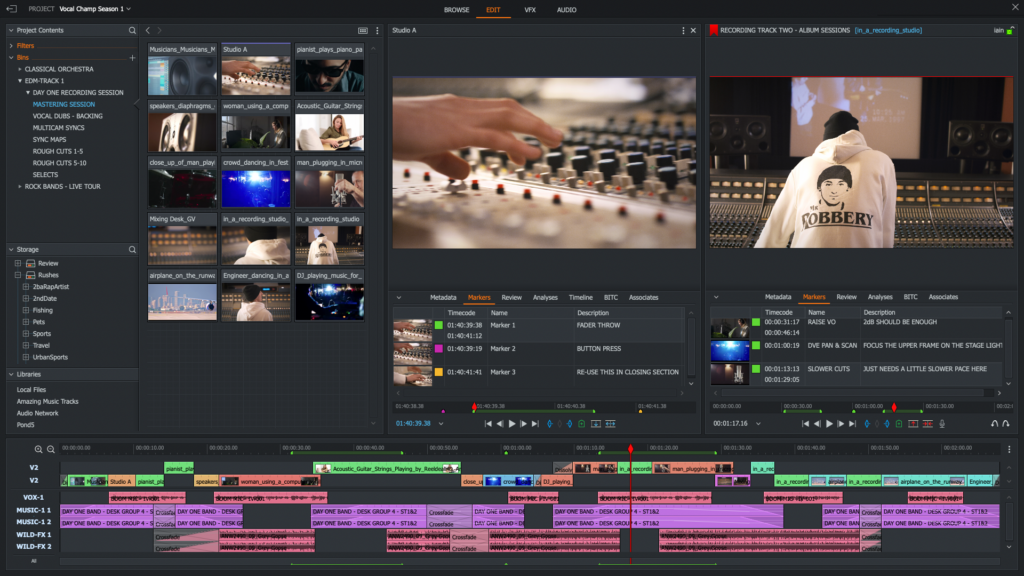
As opposed to the uncomplicated cloud storage, it comprehends video workflows. It also allows studios to tag footage, preview files without downloading, access control, version tracking, and real-time collaboration. Imagine it as a primary brain to all of your video content—organized, searchable, and scalable.
4. The Important Advantages of Video Asset Management Software to Studios
Centralized Media Library
Intermediate, edited, and final footage are in a single secure location. No external drives or folders offinalv33.
Video asset management software provides equal access to files to all, removing errors and duplication.
High-Level Search & Metadata Tagging
It becomes easy to locate the appropriate clip. Files can be tagged by:
- Project name
- Scene or shot
- Camera type
- Date
- Client
A team no longer needs to scroll endlessly; within minutes, they find the footage they are searching for.
Smooth Cooperation Between Teams
The collaborators may be editors, producers, directors, and clients, even distant.
With good video asset management software, it is possible to:
- Comment directly on videos
- Track version history
- Control permission to access sensitive information
This will make feedback organized and avoid confusion.
More Rapid Processes and Increased Productivity
Time saved = money earned.
The production cycles become short when files are easy to locate and share. Projects are finished sooner by studios, and more work is undertaken without the stress of more work.
Access Control and Secure Storage
Everything should not be viewed by everyone.
Video asset management software by professionals allows studios to:
- Set user roles
- Protect sensitive footage
- Track file activity
This plays a vital role in client trust and the protection of intellectual property.
5. Best Features to Consider in Video Asset Management Software
You should not go after features that you are not going to use when selecting the right solution. Put the most emphasis on what is important to studios:
- Cloud-Based Access: Work from any place without downloading.
- High-Resolution Preview: Watch trailers in seconds without the need to open editing programs.
- Versioning: Capture and review(also rolling back) change histories.
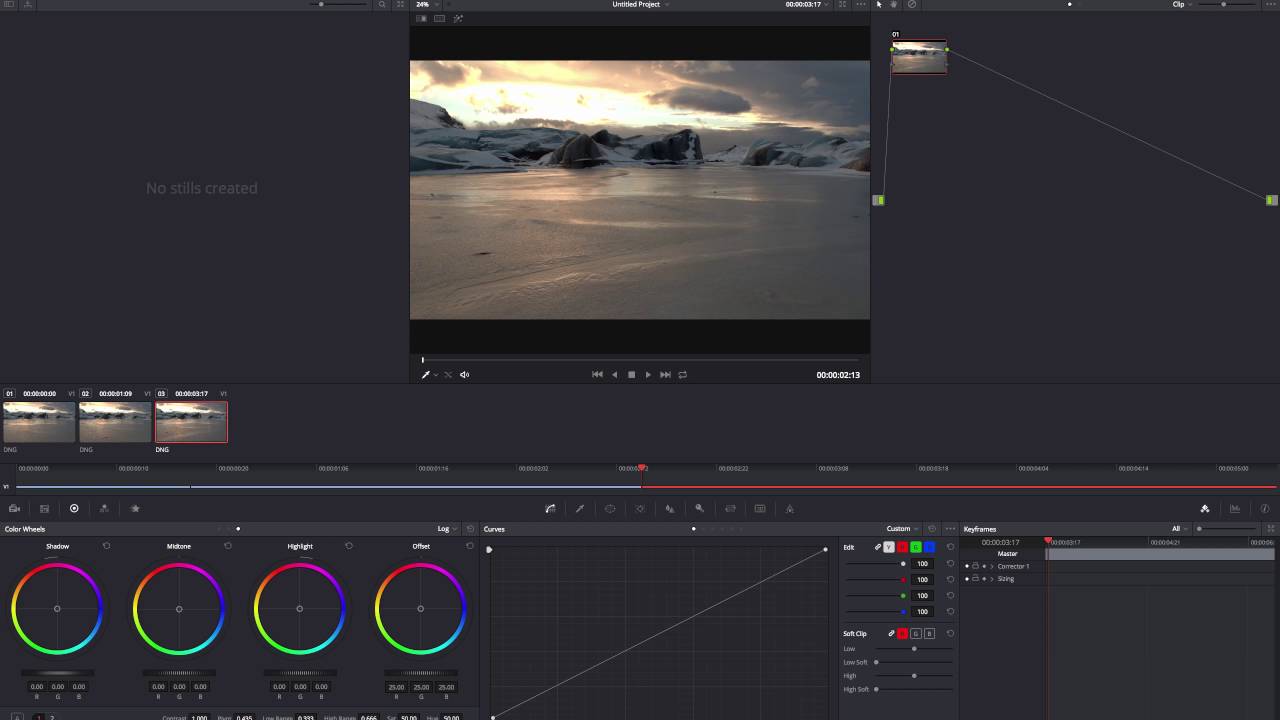
- Edit Integration: Compatible with Adobe premier, Final cut Pro, DaVinci resolve, etc.
- Scalability: The software must expand as your studio grows.
A great video asset management software becomes invisible—it does not interfere with your workflow, rather it helps you along. Adobe explains that professional digital asset management systems improve creative workflows by centralizing media, enabling metadata tagging, and supporting collaborative production environments.
6. The Real Processes of Video Asset Management Software in Studios
Let’s make this practical.
Video asset management software is normally used by a mid-sized studio that creates commercials, social advertisements, and documentaries to:
- Post-crude recordings after shoots
- Label clips by scene, location, and client
- Give editors a preview and the picking of footage.
- Securely share drafts with clients.
- Store completed projects to be used in the future.
Such a system will stop re-shoots, accelerate editing, and enhance client satisfaction.
7. Support of Long-Term Content Strategy Using Video Asset Management Software
Making Video Libraries Recurrent Creative Resources
Video asset management software is often perceived as a tool for managing existing projects. However, the most important secret of its success is the content recycling in the long-term. The properly marked and tagged footage will become an asset that can be used to create trailers, social media clips or marketing campaigns.
Ensuring Brand Coherence Between Projects
Consistency is crucial for studios working with repeat customers or internal brands. Video asset management software ensures:
- Approved logos, intros, color gradients, music tracks, and templates are centralized
- Editors always access current brand assets.
- Final outputs match creative requirements consistently.
Enhancing Processes of Production through Data.
Asset usage is offered as analytics through modern software. Studios can monitor:
- Most accessed assets
- Time spent on files
- Workflow bottlenecks
The knowledge can assist production managers to allocate resources more efficiently and in better planning future projects.
Securing Content with Intrinsic Security and Compliance.
Storage of long-term entails such legal obligations as licensed music or talent releases. Video asset management software assigns permissions and access control to every asset, which keeps them safe without being accessed by unauthorized personnel.
Developing a Scalable Content Ecosystem.
VAM software can help studios abandon their disorganized folders and enter a scaled environment. It safeguards artistic output, reuses aged work, and offers long-term usefulness in a fashion that is devoid of digital rubbish.
8. Should Video Asset Management Software Be Worth the Investment?
Yes, the cost of lost files, delayed projects, and poor collaboration far exceeds subscription fees. Studios using video asset management software benefit from:
- Faster projects
- Few mistakes
- Pleasant teams
- High client retention
It is not merely a storage, it is smarter work.
9. Video Asset Management Software Comparison: How to Choose the Best VAM Software.
The choice depends on:
- Studio size
- Volume of video content
- Team structure
- Budget
- Required integrations
Always agree to a pilot project, involve your team members and ensure the system adheres to their ways of operation and not vice versa.
10. Final Thoughts
Creative work should be under organized systems.
Video asset management software is not a luxury anymore; it brings sanity to the chaos, accelerates the process and even improves collaboration. The prudent thing for studios wishing to grow but not break down is to invest in the right software. Look through the portfolio of Rezaid Film to find examples of creative work in filmmaking, video production, and storytelling.
11. FAQs
What is the predominant use of video asset management software?
The primary feature is to organize video files, store them, search and share effectively, and facilitate collaboration and version control.
Is cloud storage better than video asset management software?
Yes. It has metadata tagging, preview and production-oriented features, unlike basic cloud storage, and it is specifically designed to support video workflows.
Does remote team support video asset management software?
Yes. The majority of contemporary VAMs are cloud-based and are tailored to smooth remote cooperation.